
For SaaS companies, the demo booking is everything. It’s the moment a curious visitor converts into a qualified pipeline opportunity — the hinge point between marketing spend and sales revenue. Yet most SaaS teams obsess over their demo request form, their CTA copy, and their lead nurturing sequences while ignoring the single variable that determines whether a visitor ever reaches any of it: how fast the page loads.
The Attention Window Is Shorter Than Your Funnel
B2B buyers are not patient. They’re evaluating three to five competitors simultaneously, often during stolen moments between meetings. When a SaaS landing page takes four seconds to load, a meaningful percentage of those high-intent visitors — the ones your paid campaigns just paid $80 a click to acquire — are already gone. They didn’t object to your pricing. They didn’t read a bad review. They simply left because something else loaded faster.
The cruel irony is that SaaS sites tend to be among the slowest in any category. Marketing teams layer on session recording tools, chatbots, A/B testing scripts, CRM trackers, and analytics tags until the page is carrying 4MB of JavaScript before a single word of copy renders. Every tool added to increase conversions incrementally degrades the speed that makes conversions possible.
Demo Pages Deserve Special Attention
Not all pages carry equal commercial weight. Your pricing page and demo request page are where purchase intent peaks — and they’re precisely where you can least afford slowness. A visitor who has clicked “Request a Demo” has already made a psychological commitment. Friction at that moment, whether a sluggish form load or a delayed page transition, introduces doubt and hesitation into a moment that should feel seamless and confident.
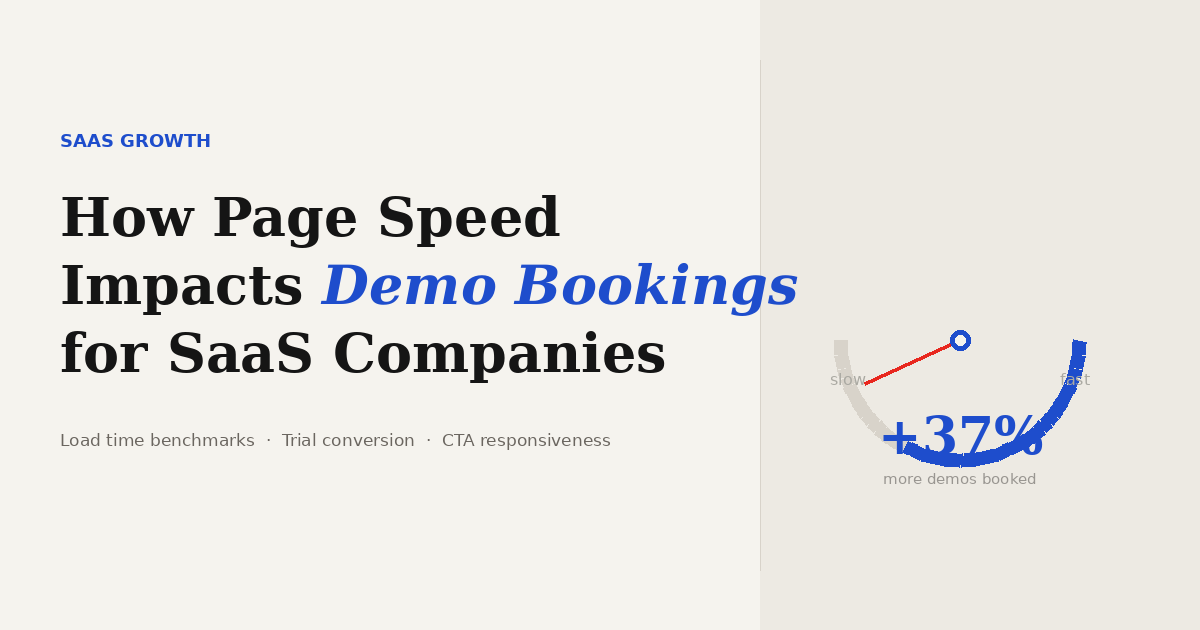
Research consistently shows that form completion rates drop as page response time increases. For SaaS companies with average deal sizes in the thousands or tens of thousands, even a modest improvement in demo booking rate — say, moving from 2.8% to 3.4% — can represent hundreds of thousands in additional annual pipeline from the same traffic.
Speed as a Brand Signal
There’s a subtler dimension too. When a prospect lands on your site to evaluate whether your software can handle their business, a slow, janky experience sends an unspoken message about your product quality. SaaS buyers are technically literate. They notice. A fast, crisp site signals engineering discipline and product maturity — before they’ve seen a single screenshot.
What SaaS Teams Should Prioritize
The highest-leverage fixes are consistent: reduce third-party script bloat by auditing every tag in your tag manager, implement lazy loading for below-the-fold content, host critical assets on a CDN, and use a lightweight CMS or static generation for marketing pages where possible. Tools like Vercel or Netlify paired with a headless CMS can deliver near-instant load times without sacrificing the flexibility your marketing team needs.