
1. Slow Landing Page Load Times
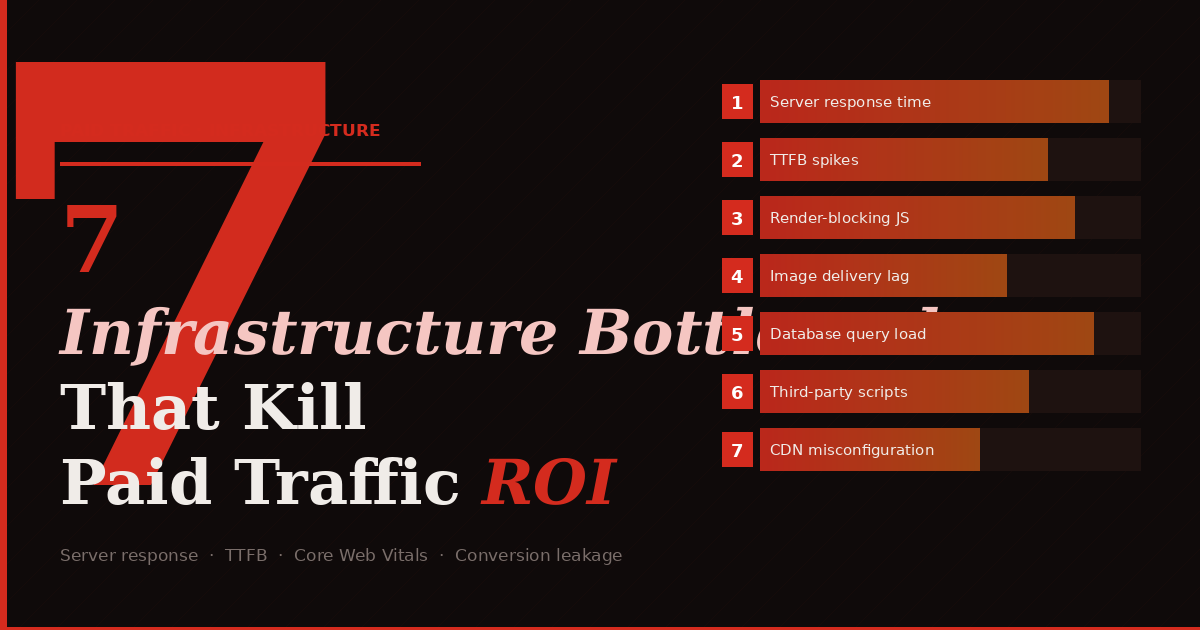
This is the most expensive and most ignored problem in paid media. When a visitor clicks your ad, they’re at peak intent. A page that takes more than three seconds to load on mobile burns that intent down to nothing. Google and Meta both factor landing page experience into ad quality scores, meaning slow pages don’t just lose conversions — they raise your cost per click too. You pay more to reach fewer people who convert less.
2. Unoptimized Mobile Experience
Over 60% of paid traffic arrives on mobile devices, yet most landing pages are still designed desktop-first and optimized as an afterthought. Oversized images, unresponsive layouts, and tap targets too small for a thumb create friction that kills conversions silently. Mobile visitors don’t complain — they leave.
3. Render-Blocking JavaScript
Third-party scripts — analytics, chat widgets, retargeting pixels, A/B testing tools — are loaded synchronously on most sites, meaning the browser halts rendering until each script executes. A page visually complete in 1.2 seconds can have an interactive delay of four or more seconds because of script bloat. Visitors see the page but can’t use it, and they don’t wait.
4. No CDN or Poor CDN Configuration
Serving assets from a single origin server means every visitor’s physical distance from that server adds latency. A CDN distributes assets globally so content loads from wherever the user is closest to. Without it, international campaigns and even domestic campaigns targeting geographically distributed audiences suffer unnecessarily.
5. Database Bottlenecks on Dynamic Pages
For WordPress and similar CMS platforms, dynamic pages trigger multiple database queries on every load. Under paid traffic spikes — a product launch, a flash sale, a viral ad — these queries queue up, response times balloon, and pages begin timing out entirely. Sending expensive traffic to a server that’s buckling under the load is burning budget in real time.
6. Redirect Chains
Every redirect adds an HTTP round-trip, typically 100–300ms each. A URL with three redirects before reaching the final destination can add nearly a full second of latency before a byte of content loads. Paid traffic URLs frequently suffer from this due to tracking parameters, legacy URL structures, and campaign-specific routing — all stacking delays invisibly.
7. No Caching on High-Intent Pages
Pricing pages, landing pages, and demo request pages should serve cached responses to the overwhelming majority of visitors. When these pages are generated dynamically on every request, they become the most fragile pages on your site — the ones most likely to slow under traffic spikes and the ones where slowness is most costly. Caching these pages is not optional infrastructure hygiene; it’s a direct revenue protection measure.