Managing a growing digital agency requires more than finding new clients and delivering creative solutions. Agencies must balance project deadlines, technical requirements, client communication, development resources, and business operations. As client demand increases, maintaining enough in-house WordPress developers to handle every project can become expensive and difficult to manage.
This is why WordPress outsourcing for agencies has become a practical business model for companies looking to expand their development capacity without building a large permanent technical team.
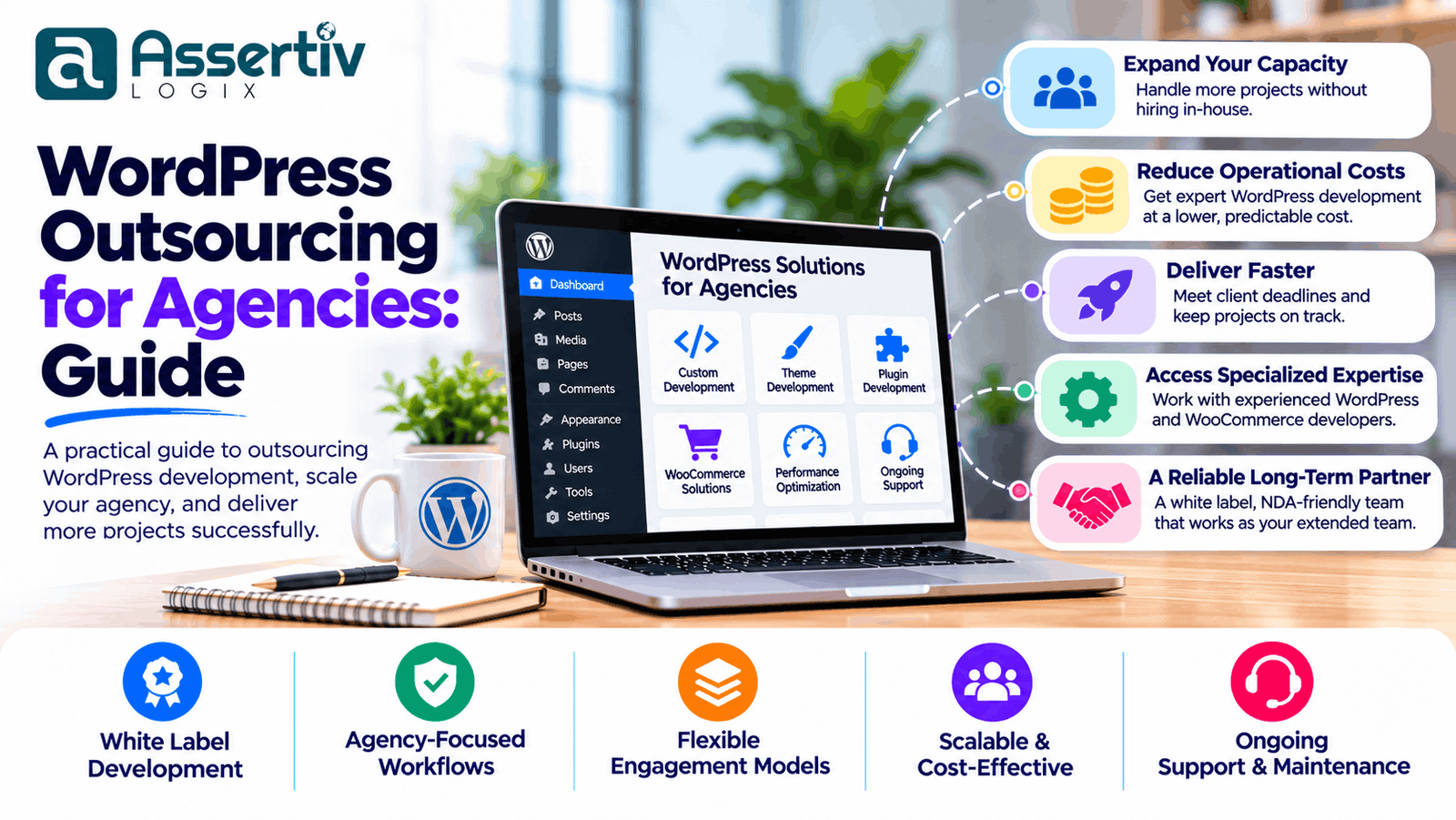
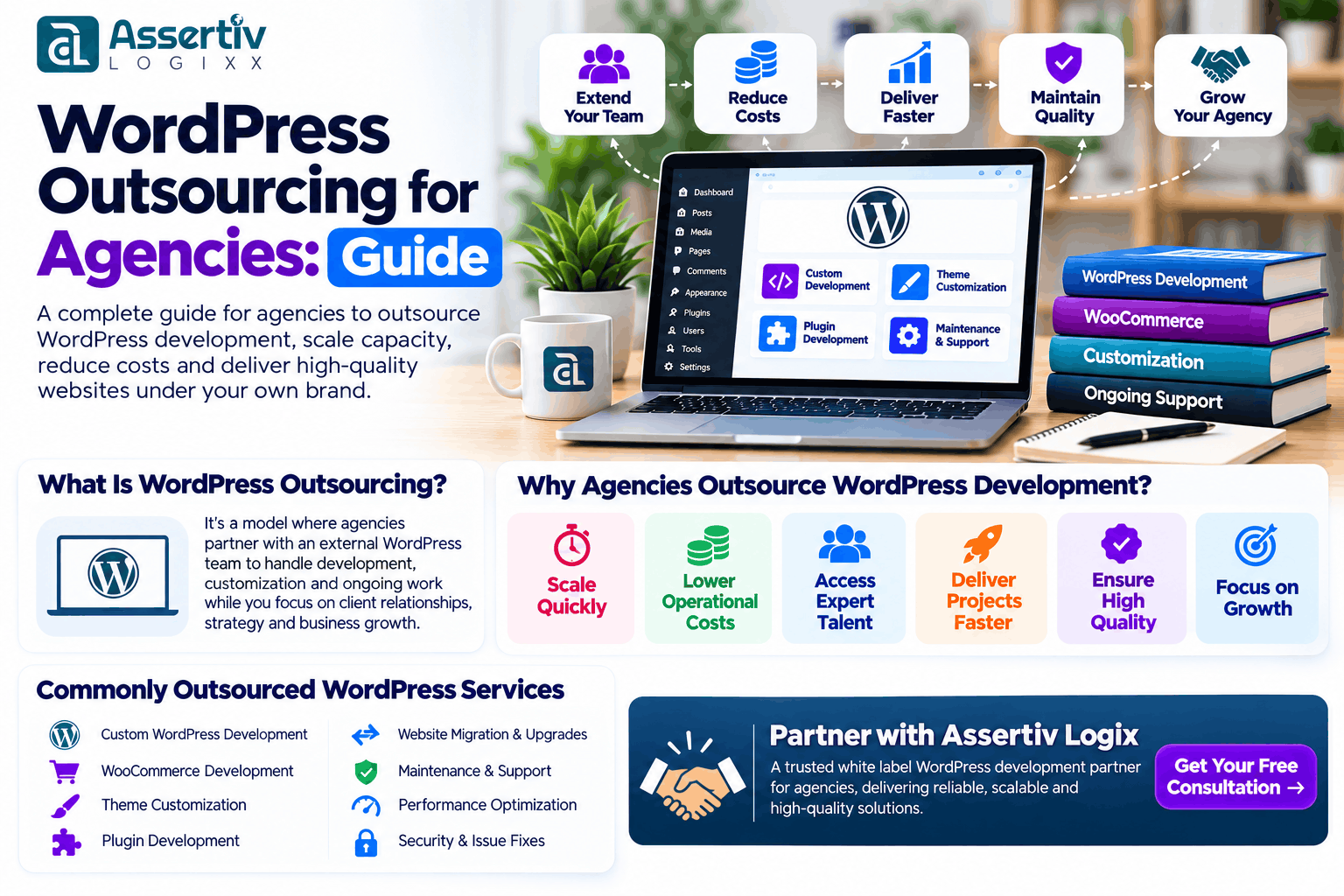
By partnering with an external WordPress development company, agencies can delegate website development, custom theme creation, plugin development, WooCommerce customization, API integrations, and ongoing technical support. Their internal teams can focus on business development, design, marketing, and client relationships while experienced developers handle the technical implementation.
However, successful outsourcing requires more than finding an affordable developer. Agencies need a reliable development partner, a clear project workflow, transparent pricing, quality assurance, and appropriate confidentiality agreements.
In this guide, we explain how WordPress outsourcing works for agencies, its benefits, available outsourcing models, common challenges, and how to select the right development partner.
What Is WordPress Outsourcing for Agencies?
WordPress outsourcing for agencies is a business arrangement in which a digital agency hires an external developer, development team, or WordPress development company to complete technical work for its clients.
The agency usually maintains ownership of the client relationship, project requirements, commercial agreement, and overall delivery coordination. The outsourcing partner handles the agreed development responsibilities.
For example, a web design agency may receive a project to create a custom WordPress website for a business. Instead of assigning the complete development workload to its internal team, the agency can outsource implementation to a specialist WordPress development company.
The agency continues to manage the client, approve the work, and deliver the completed website. Depending on the agreement, the external development team can remain behind the scenes or participate in technical discussions.
Agencies can outsource:
- Complete WordPress website development
- Custom WordPress theme development
- WordPress plugin development and customization
- WooCommerce website development
- Custom checkout and payment gateway integrations
- Third-party API integrations
- Website migration and redesign
- WordPress speed and performance optimization
- Website security and maintenance
- Ongoing technical support and troubleshooting
Why Do Digital Agencies Outsource WordPress Development?
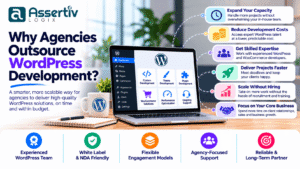
Agencies outsource WordPress development for different reasons. Some need additional developers to manage increasing workloads, while others want access to specialist skills or a more flexible delivery model.
The main objective is to build a development operation that supports business growth without creating unnecessary operational complexity.
1. Expand Development Capacity Without Hiring Full-Time Developers
Recruiting developers requires time, investment, onboarding, and ongoing employee management. These commitments can become challenging when project demand changes throughout the year.
Outsourcing allows agencies to access additional development resources when suitable projects become available. Instead of hiring a permanent developer for every new requirement, the agency can work with an external team based on project scope and resource availability.
This can be particularly useful for agencies that receive several WordPress projects at irregular intervals.
2. Access Experienced WordPress Developers
Not every agency has the technical expertise required for every WordPress project. A standard business website, custom plugin, and advanced WooCommerce store can require very different development skills.
An outsourcing partner can provide access to developers experienced in:
- WordPress core development and PHP
- Custom theme architecture
- Plugin development and customization
- WooCommerce development
- JavaScript and frontend development
- REST API integrations
- Database optimization
- Website performance and security
This helps agencies accept suitable technical projects without having to recruit every specialist internally.
3. Manage Increasing Client Workloads
A growing agency may have a strong sales pipeline but limited development capacity. When multiple clients require websites, updates, and custom functionality at the same time, internal developers can become overloaded.
External development support can provide additional capacity and help agencies distribute workloads more effectively.
Before accepting additional projects, agencies should confirm their partner’s availability, delivery schedule, and ability to meet the required quality standards.
4. Reduce Operational Costs
Maintaining an in-house development team involves salaries, recruitment, training, equipment, software, employee benefits, and management expenses.
Outsourcing can provide a more flexible cost structure when an agency does not have enough consistent work to justify permanent hiring.
However, outsourcing is not automatically less expensive. Agencies should compare provider fees with the full cost of internal delivery, including project management, testing, revisions, communication, and ongoing support.
5. Focus on Sales, Marketing, and Client Relationships
Agency owners and managers often spend considerable time coordinating development work. This can reduce the time available for business development and client acquisition.
By delegating agreed technical responsibilities, agencies can focus more on:
- Finding new business opportunities
- Building partnerships
- Preparing proposals and presentations
- Managing client accounts
- Planning digital strategies
- Improving customer experience
- Growing recurring revenue
Outsourcing does not remove the need for project management, but it can help agencies allocate their internal resources more effectively.
6. Offer More Services to Existing Clients
Clients often need additional technical support after their websites launch. They may request new functionality, WooCommerce features, integrations, performance improvements, or website migrations.
An outsourcing partner can help agencies expand their service offerings and support more client requirements.
For example, an agency primarily offering SEO and website design can introduce custom WordPress development and WooCommerce services without immediately building a complete technical department.
Explore our WooCommerce Development Services to understand the types of technical services agencies can offer.
WordPress Outsourcing Models for Agencies
Different agencies have different workloads and operational requirements. Choosing the right outsourcing model helps establish clear responsibilities, costs, and delivery expectations.
1. Project-Based Outsourcing
Under project-based outsourcing, the agency assigns a defined WordPress project to an external development partner.
The provider agrees to complete specific deliverables within an agreed scope, budget, and timeline.
Suitable for:
- Business website development
- Website redesign projects
- Custom theme development
- WooCommerce store development
- Website migration
- Custom functionality implementation
This model works well when the project requirements and acceptance criteria can be documented clearly.
2. Dedicated Developer Model
In this arrangement, the agency reserves a developer or development resource for an agreed period and capacity.
The developer works on assigned agency projects and follows the agreed communication, reporting, and delivery process.
Suitable for:
- Agencies with consistent development requirements
- Multiple active WordPress projects
- Long-term client accounts
- Ongoing custom development work
Working hours, availability, holidays, project priorities, and responsibilities should be documented before the engagement starts.
3. Hourly Outsourcing
With hourly outsourcing, the agency pays for the actual development time used on approved tasks.
This model is useful when requirements are uncertain or when the agency needs occasional technical assistance.
Suitable for:
- Bug fixes and troubleshooting
- Small feature improvements
- Technical investigations
- Website maintenance tasks
- Ongoing development requests
Agencies should establish time-tracking expectations, approval limits, reporting frequency, and hourly billing terms.
4. White Label WordPress Outsourcing
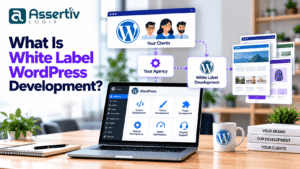
White-label outsourcing allows an agency to outsource WordPress development while presenting the completed work under its own brand, subject to the agreement between both businesses.
The agency manages the client relationship, while the external provider completes the agreed technical tasks behind the scenes.
This model is particularly useful for digital marketing agencies, web design studios, branding companies, and freelancers that want to offer website development without maintaining a complete internal development team.
Read our detailed guide on White Label WordPress Development Services.
What WordPress Services Can Agencies Outsource?
Agencies can outsource individual technical tasks or complete WordPress projects, depending on their internal capabilities and client requirements.
Custom WordPress Website Development
External developers can build professional business websites, corporate websites, landing pages, blogs, portfolios, and custom digital experiences based on the agency’s specifications.
This can include responsive layouts, custom page templates, content management functionality, forms, and third-party integrations.
WordPress Theme Development
Agencies can outsource custom theme development when a project requires a unique design or functionality beyond an existing theme.
Development may include custom templates, reusable components, responsive styling, theme customization, and integration with WordPress features.
Custom WordPress Plugin Development
When a client needs functionality that existing plugins cannot provide, agencies can work with specialist developers to create custom WordPress plugins.
Examples include:
- Custom business management functionality
- Third-party service integrations
- Custom booking and enquiry systems
- Payment gateway functionality
- Automation and workflow extensions
- Custom administrative features
Learn more about our WordPress Plugin Development services.
WooCommerce Development
WooCommerce projects can involve more than installing an eCommerce plugin. Agencies may need custom product functionality, checkout modifications, payment integrations, shipping rules, subscription features, and performance improvements.
Outsourcing WooCommerce development gives agencies access to additional technical resources for these requirements.
WordPress Migration and Redesign
Agencies can outsource migrations from another CMS, hosting environment, or WordPress installation. A development partner can help with content migration, database transfer, URL mapping, testing, and launch preparation.
Speed Optimization and Maintenance
Ongoing WordPress maintenance and performance work may involve updates, backups, troubleshooting, caching configuration, image optimization, database cleanup, and Core Web Vitals improvements.
These tasks can be assigned through recurring support agreements or individual project scopes.
How Does WordPress Outsourcing Work for Agencies?
A structured outsourcing workflow helps agencies maintain control over project delivery while external developers handle technical implementation.
Step 1: Understand the Client’s Requirements
The agency gathers information about the client’s business goals, website functionality, design requirements, integrations, content, timeline, and budget.
All important requirements should be documented before requesting a development estimate.
Step 2: Prepare a Detailed Project Brief
Create a development brief containing the project scope, design files, reference websites, technical specifications, required features, and acceptance criteria.
A detailed brief helps the development partner estimate the project accurately and reduces unnecessary revisions.
Step 3: Select the Right Outsourcing Partner
Review the provider’s WordPress experience, portfolio, technical expertise, availability, communication process, and commercial terms.
Choose a partner whose capabilities match the project’s actual requirements.
Step 4: Finalize Scope, Pricing, and Timeline
Agree on deliverables, milestones, payment terms, responsibilities, revision limits, testing requirements, and support arrangements.
Any additional requirements should follow an agreed change-request process.
Step 5: Begin Development
The external team starts implementation based on the approved requirements. Use staging environments, version control, and regular progress updates to keep the work organized.
Step 6: Review and Test the Deliverables
The agency reviews the website against the agreed scope and tests important functionality, including responsive layouts, forms, integrations, navigation, and eCommerce workflows where applicable.
Step 7: Complete Handover and Launch
After approval, the project moves to launch or client handover. Confirm source-code access, documentation, credentials, ownership, and post-launch support responsibilities.
WordPress Outsourcing vs. In-House Development
Outsourcing and in-house development both have advantages. The best choice depends on how frequently the agency receives development work and how much direct technical control it needs.
| Comparison | Outsourcing | In-House Development |
|---|---|---|
| Resource structure | External development partner | Internal employees |
| Cost structure | Often variable by project or capacity | Ongoing employment and operating expenses |
| Specialist skills | Can access external expertise | Depends on internal recruitment |
| Workload flexibility | Can adjust through agreements | Requires internal resource planning |
| Daily collaboration | Requires coordination | Usually more direct |
| Project control | Managed through scope and agreements | Direct internal management |
| Best suited for | Variable workloads and specialist projects | Consistent development demand |
Many agencies use a hybrid model, maintaining a small internal team for core activities while outsourcing specialist development and additional workloads.
How Much Does WordPress Outsourcing Cost for Agencies?
WordPress outsourcing costs depend on project complexity, functionality, design requirements, developer experience, integrations, timeline, and support expectations.
There is no single price that applies to every agency or development partner. A basic business website and a custom WooCommerce platform have very different technical requirements.
Common pricing arrangements include:
- Fixed project pricing: A defined amount for agreed deliverables.
- Hourly pricing: Payment based on approved development time.
- Monthly retainer: A recurring fee for an agreed service level or development capacity.
- Dedicated developer pricing: An agreed fee for reserved developer capacity over a defined period.
When calculating the client price, agencies should consider more than the external developer’s fee. Include internal project management, quality assurance, client communication, software costs, payment fees, revisions, and ongoing support.
For a deeper explanation, read our WordPress Development Outsourcing Guide.
Common Challenges of WordPress Outsourcing
Although outsourcing can help agencies expand their capabilities, it requires proper management. The following challenges should be addressed before assigning client work.
Communication Problems
Unclear instructions and delayed responses can create misunderstandings.
Solution: Use detailed project briefs, agreed communication channels, regular updates, and documented approvals.
Quality Control
The agency remains responsible for the quality of work delivered to its clients, even when the technical work is outsourced.
Solution: Establish coding standards, testing requirements, code reviews, and a clear acceptance process.
Delivery Delays
External resource availability, changing requirements, and third-party dependencies can affect project timelines.
Solution: Confirm availability, define milestones, identify dependencies, and communicate delivery risks early.
Security and Confidentiality
WordPress projects may involve sensitive business information, hosting credentials, customer data, and production systems.
Solution: Use written confidentiality agreements, secure credential sharing, least-privilege access, and appropriate access revocation.
Unclear Ownership
Disagreements may occur if contracts do not explain who owns custom code, designs, licenses, and project documentation.
Solution: Define intellectual property rights, licensing, source-code handover, and ownership terms in writing.
How to Choose the Right WordPress Outsourcing Partner
Selecting a development partner is one of the most important decisions an agency makes. The provider should be technically capable and understand how agencies manage client projects.
Review Technical Experience
Look for experience in WordPress, PHP, MySQL, custom themes, plugin development, WooCommerce, APIs, and performance optimization, depending on your project needs.
Check Portfolio and Previous Work
Review comparable projects and ask what the provider actually developed. Look beyond visual appearance and consider functionality, usability, responsiveness, and technical quality.
Evaluate Communication
Confirm who will manage communication, how progress will be reported, and how urgent issues will be escalated.
Understand Pricing and Scope
Request clear estimates and confirm what is included. Discuss revisions, additional work, payment terms, milestones, and post-launch support.
Check Quality Assurance Practices
Ask how the provider tests websites, handles bugs, reviews code, manages deployments, and protects client environments.
Start With a Small Project
Before assigning a major client project, consider a smaller paid engagement to evaluate delivery reliability, communication, technical skills, and responsiveness to feedback.
Why Choose Assertivlogix for WordPress Outsourcing?
Assertivlogix provides WordPress and WooCommerce development services for agencies and businesses that need additional technical expertise and development capacity.
We understand that agency partnerships require more than technical implementation. Development work must align with client requirements, design specifications, delivery milestones, quality standards, and business expectations.
Our development capabilities include:
- Custom WordPress website development
- Custom WordPress theme development
- WordPress plugin development and customization
- WooCommerce development
- Custom eCommerce functionality
- Payment gateway integrations
- Third-party API integrations
- WordPress migration and redesign
- Website performance optimization
- Ongoing maintenance and technical support
Agencies can discuss project-based development requirements and potential white-label working arrangements with our team.
Whether you need support for one client project or additional development capacity for ongoing work, we can discuss a suitable approach based on your requirements.
Explore Assertivlogix WordPress Development Services or learn more about our WooCommerce Development Services.
Expand your agency’s development capacity with custom WordPress and WooCommerce development support from Assertivlogix. Share your project requirements and discuss a suitable working arrangement with our team.
Frequently Asked Questions
What is WordPress outsourcing for agencies?
WordPress outsourcing for agencies is the practice of hiring an external developer or development company to complete WordPress-related work for the agency’s clients. The agency generally manages the client relationship while the external provider handles agreed technical tasks.
Why do digital agencies outsource WordPress development?
Agencies outsource WordPress development to access specialist skills, manage changing workloads, expand service offerings, reduce the need for permanent hiring, and handle additional client projects.
What WordPress services can agencies outsource?
Agencies can outsource complete website development, custom themes, plugin development, WooCommerce customization, API integrations, website migration, performance optimization, maintenance, and technical support.
Is WordPress outsourcing suitable for small agencies?
Yes. Small agencies can use outsourcing to access development skills and manage projects without immediately building a full-time technical department. They should select a partner and pricing model that match their actual workload.
What is the difference between white-label development and WordPress outsourcing?
WordPress outsourcing refers to delegating development work to an external provider. White-label development is an arrangement in which the agency delivers that work under its own brand, subject to agreed branding and confidentiality terms.
How much does WordPress outsourcing cost?
Costs depend on project scope, complexity, developer experience, integrations, delivery timelines, and support requirements. Providers may charge fixed project fees, hourly rates, monthly retainers, or dedicated developer fees.
How can agencies ensure quality when outsourcing WordPress development?
Agencies should provide detailed requirements, agree on coding and testing standards, review deliverables, use staging environments, document approvals, and maintain clear communication with the development partner.
How do I find a reliable WordPress outsourcing company?
Review the company’s WordPress experience, portfolio, technical expertise, communication process, pricing transparency, quality assurance practices, and contractual terms. Starting with a small project can help evaluate the partnership.
Conclusion
WordPress outsourcing for agencies offers a flexible way to access technical expertise, manage development workloads, and expand service capabilities without building every resource internally.
With the right outsourcing model, agencies can support more client projects, introduce additional WordPress services, and focus their internal teams on business growth and customer relationships.
However, successful outsourcing depends on selecting a reliable development partner, defining responsibilities, maintaining quality standards, protecting client information, and establishing clear commercial terms.
Whether you need custom WordPress development, WooCommerce customization, plugin development, or ongoing technical support, a well-managed outsourcing partnership can become a valuable extension of your agency.