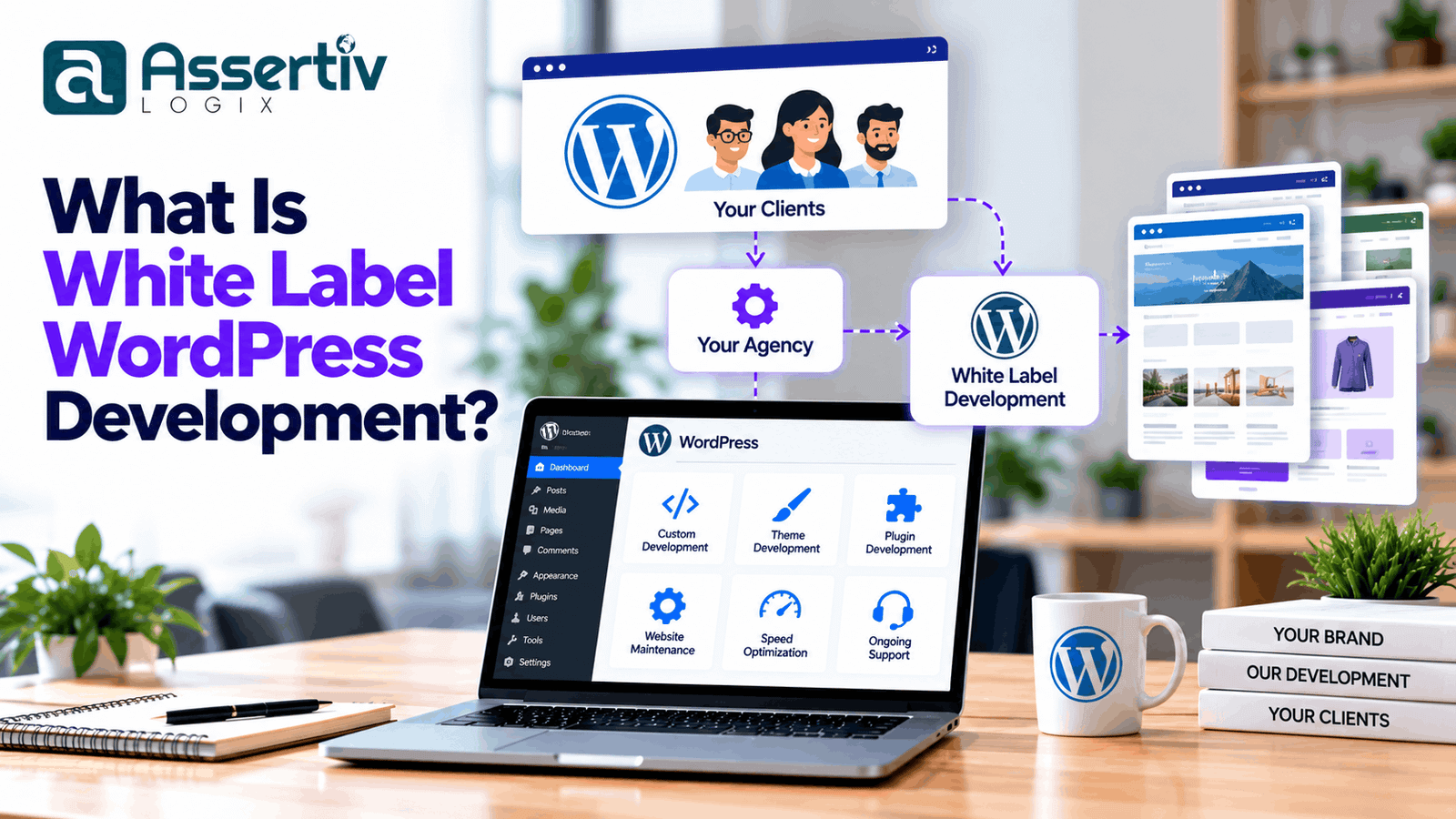
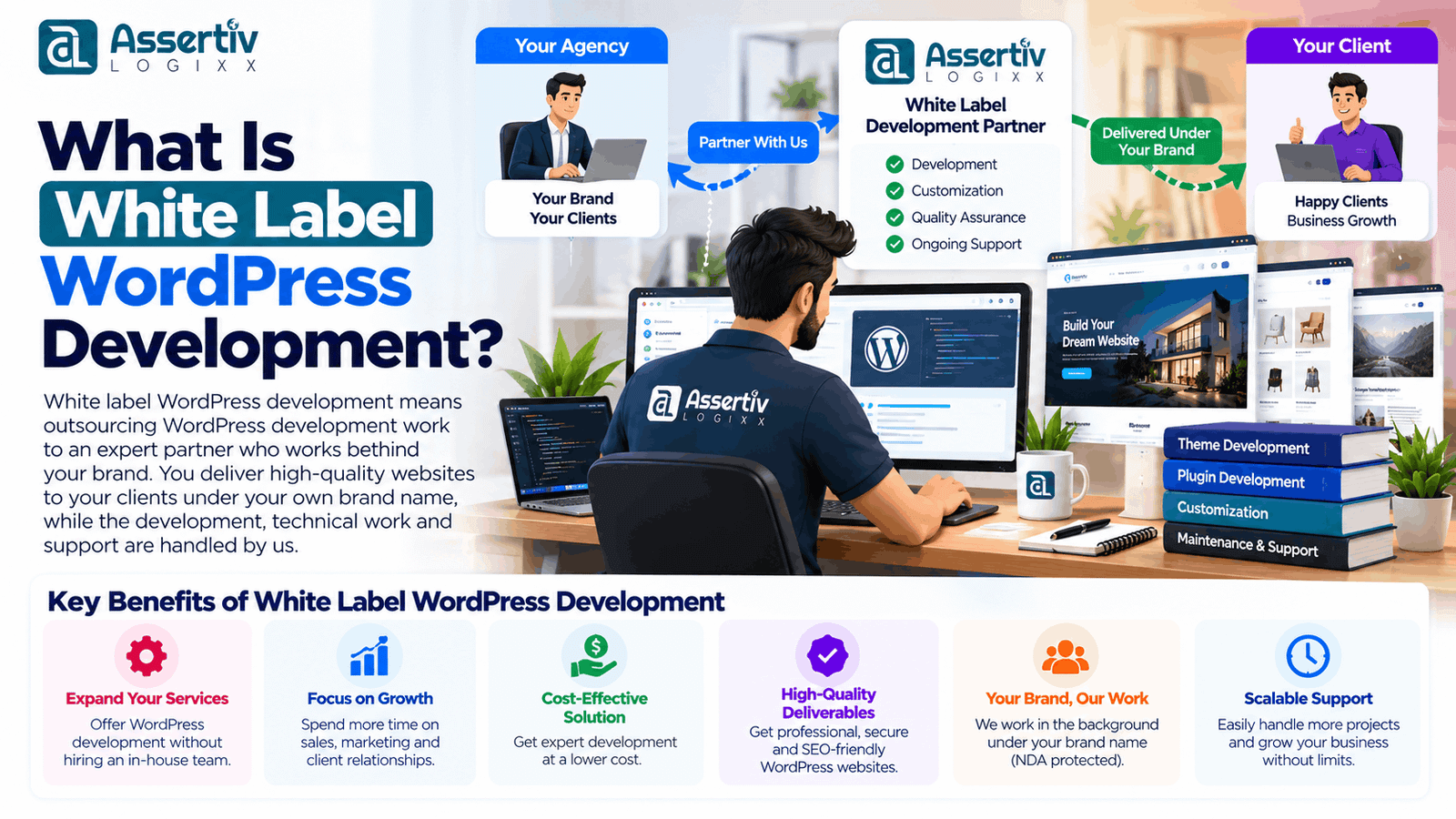
White label WordPress development is a business arrangement in which one company builds or customizes a WordPress website for another company, while the second company presents the finished work under its own brand. It allows digital agencies, marketing firms, freelancers, and consultants to offer WordPress development without completing every technical task in-house.
For example, a marketing agency may win a client who needs a custom WordPress website. Instead of hiring additional developers, the agency partners with a white-label development provider. The provider builds the website according to the agency’s requirements, and the agency delivers it to the client under its own brand.
This approach can help agencies expand their services, manage more projects, and focus on client relationships. However, it works best when both companies agree on responsibilities, communication, quality standards, confidentiality, and project ownership.
How Does White Label WordPress Development Work?
White label WordPress development usually involves two businesses: the agency that owns the client relationship and the development partner that handles the technical work.
The agency manages the client, understands the business requirements, prepares the proposal, and communicates project updates. The development partner handles the agreed development tasks, such as building a theme, customizing plugins, developing WooCommerce functionality, or improving website performance.
A typical workflow includes the following steps.
1. The Agency Identifies the Client’s Requirements
The agency discusses the client’s goals, website features, design preferences, integrations, timeline, and budget. It then turns those discussions into a clear project brief.
A detailed brief helps prevent misunderstandings and reduces unnecessary revisions during development.
2. The Agency Shares the Project With Its Development Partner
The agency sends the requirements, design files, content, technical specifications, and relevant access details to its white-label development partner.
Both businesses agree on deliverables, milestones, deadlines, pricing, testing requirements, and the communication process before work begins.
3. The Development Partner Builds the Website
The development team completes the agreed work. Depending on the project, this may involve custom theme development, plugin customization, responsive layouts, WooCommerce configuration, API integrations, or performance improvements.
The provider can work in a staging environment so the agency can review progress without affecting the client’s live website.
4. The Agency Reviews the Work
The agency checks the website against the agreed requirements. It may request corrections, test important user journeys, and collect feedback from the client.
A good white-label process includes time for testing, bug fixes, and reasonable revisions rather than treating the first delivery as automatically final.
5. The Agency Delivers the Project Under Its Brand
After approval, the agency coordinates the launch or handover. The client continues to work with the agency, while the technical provider remains behind the scenes if that arrangement has been agreed.
The contract should clearly explain whether the provider may communicate directly with the end client, how support requests are handled, and who owns the final deliverables.
What Services Can Be Offered Through White Label WordPress Development?
White-label arrangements can cover a single technical task or an entire website project. Common services include:
Custom WordPress Website Development
A development partner can build business websites, corporate websites, landing pages, portfolios, blogs, and custom WordPress experiences based on the agency’s specifications.
Custom Theme Development
Agencies can outsource custom theme development when a project requires a tailored design, reusable templates, responsive layouts, or functionality beyond an off-the-shelf theme.
WordPress Plugin Development
A white-label partner can create custom plugins, extend existing functionality, integrate third-party services, and develop features specific to a client’s workflow.
WooCommerce Development
For eCommerce projects, agencies can outsource store setup, custom product features, checkout adjustments, payment gateway integrations, shipping rules, and other WooCommerce functionality.
Website Maintenance and Support
Some providers also handle WordPress core, theme, and plugin updates, backups, security checks, bug fixes, and ongoing technical support. The scope and response times should be defined in advance.
Speed, Security, and Migration
Specialist support may include performance optimization, Core Web Vitals improvements, website migrations, troubleshooting, security hardening, and recovery from common technical issues.
Not every provider offers every service. Agencies should check relevant experience and request examples of comparable work before assigning a project.
What Are the Benefits of White Label WordPress Development?
White-label development can help an agency grow without immediately building a large in-house technical team. Its value depends on project volume, partner quality, pricing, and how well the workflow is managed.
1. Expand Services Without Hiring a Full-Time Team
An agency can offer more WordPress and WooCommerce services without recruiting a developer for every new skill or project. This can be particularly useful when demand fluctuates.
2. Take On More Projects
When the agency has a reliable development partner, it may be able to accept projects that would otherwise exceed its team’s capacity. The agency still needs to manage timelines and avoid promising more work than its partner can deliver.
3. Focus on Sales and Client Relationships
The agency can concentrate on strategy, design direction, marketing, account management, and business development while the partner handles the agreed technical tasks.
4. Access Specialized Skills
A partner with experience in custom plugins, WooCommerce, API integrations, or performance optimization can help the agency take on more technically demanding work.
5. Manage Costs More Flexibly
Outsourcing may reduce the need for fixed payroll costs when the agency does not have enough consistent work for a full-time developer. However, outsourcing is not automatically cheaper: project management, quality assurance, revisions, and support must also be included in the cost calculation.
6. Maintain a Consistent Brand Experience
The agency can present the finished work through its own business, provided the parties have agreed on branding and confidentiality. Consistent communication and quality control help the agency maintain trust with its clients.
White Label vs. Traditional WordPress Outsourcing
These terms are related, but they emphasize different aspects of the relationship.
| Factor | White-label development | Traditional outsourcing |
|---|---|---|
| Branding | Work is delivered under the agency’s brand, as agreed | Provider involvement may be visible to the client |
| Client relationship | Usually managed by the agency | May be managed by the agency, provider, or both |
| Communication | Often routed through the agency | May involve direct provider-client communication |
| Typical purpose | Extend an agency’s service capacity under its brand | Delegate technical work or specialist tasks |
| Agreement | Should define confidentiality, branding, and ownership | Should define scope, ownership, and responsibilities |
Neither model is inherently better. The right choice depends on how the agency wants to manage its clients and technical delivery.
Is White Label WordPress Development Right for Your Agency?
White-label development may be a good fit if you:
- Run a digital marketing, design, branding, or web development agency.
- Regularly receive WordPress projects but lack enough in-house development capacity.
- Want to offer custom WordPress or WooCommerce services without hiring for every skill.
- Need specialist support for occasional complex projects.
- Want a delivery partner for ongoing maintenance or recurring development work.
It may be less suitable if you need constant, immediate developer availability but have no agreed support arrangement, or if your projects require highly specialized internal knowledge that cannot be transferred easily to an external partner.
Before choosing a provider, estimate your likely project volume and compare the total cost of outsourcing with the cost of building the required capability in-house.
How to Choose a White Label WordPress Development Partner
The partner’s technical ability matters, but dependable delivery and clear working arrangements matter just as much.
Review Relevant Experience
Look for experience with the type of work you sell, such as custom WordPress themes, WooCommerce stores, plugin development, API integrations, or website optimization. Ask for relevant examples and clarify exactly what the provider delivered.
Check Communication and Project Management
Agree on who will be your main contact, how often you will receive updates, which project management tools you will use, and how urgent issues will be handled.
Understand Pricing and Scope
Request a written scope that explains deliverables, exclusions, milestones, payment terms, revision limits, and charges for additional work. Compare the total expected cost rather than only the initial quote.
Establish Confidentiality and Ownership
Use a written agreement that addresses confidentiality, client information, intellectual property, code ownership, access permissions, subcontracting, and any non-solicitation expectations that are appropriate and enforceable in your jurisdiction.
Do not assume that the phrase “white label” automatically settles these matters. Make the terms explicit.
Confirm Quality Assurance and Security Practices
Ask how the provider tests responsive layouts, forms, checkout flows, integrations, accessibility considerations, and performance. Confirm how updates, backups, credentials, and production deployments are managed.
Use the principle of least privilege for access, and avoid sharing unnecessary production credentials or client data.
Start With a Small Project
Before assigning a large client project, consider a limited trial task. Evaluate code quality, responsiveness, adherence to instructions, delivery speed, documentation, and how effectively the provider handles feedback.
Common Mistakes to Avoid
White-label partnerships can become difficult when expectations are unclear. Avoid these common problems:
- Choosing only by price: A low quote may exclude testing, documentation, support, or important functionality.
- Sending incomplete requirements: Missing design details or acceptance criteria can lead to delays and disputes.
- Making promises before confirming capacity: Verify the partner’s availability and timeline before committing to the client.
- Skipping quality assurance: Test the finished website before presenting it as ready for launch.
- Leaving ownership unclear: Document ownership of code, designs, licenses, and other deliverables.
- Ignoring post-launch support: Decide who will handle bugs, updates, backups, and urgent requests after launch.
- Failing to protect client information: Use appropriate access controls and confidentiality agreements.
How Assertivlogix Can Support Your Agency
Assertivlogix provides WordPress and WooCommerce development services for businesses that need technical implementation, customization, and ongoing website support. Agencies looking to extend their delivery capacity can discuss project requirements, development responsibilities, and a suitable working arrangement.
Whether you need help with a custom WordPress website, plugin development, WooCommerce functionality, API integrations, or performance improvements, the first step is to define the project scope and expected outcomes.
Visit Assertivlogix to learn more about the company, or contact the team to discuss your requirements.
<div class=”blog_cta_wrap”> <span>Need a WordPress development partner?</span> <p>Discuss your project requirements with Assertivlogix and explore a development arrangement that fits your agency’s workflow.</p> <p><a id=”talk_to_expert” class=”btn button” href=”https://www.assertivlogix.com/contact/“>Get Your Free Consultation</a></p> </div>
Frequently Asked Questions
What is white label WordPress development in simple terms?
It is when one company develops a WordPress website or feature for another company, which then delivers the work under its own brand according to their agreement.
Who uses white label WordPress development?
Digital agencies, marketing companies, design studios, freelancers, consultants, and web development businesses use it to expand their services or manage additional projects.
Can white label WordPress development include WooCommerce?
Yes. It can include WooCommerce store development, custom product functionality, checkout changes, payment integrations, shipping configuration, and other eCommerce requirements.
Is white label WordPress development cheaper than hiring developers?
It can be more flexible for agencies with changing workloads, but it is not always cheaper. Compare development fees, project management, testing, revisions, support, and the cost of maintaining an in-house team.
Will the client know that a third-party developer is involved?
That depends on the agreement and how the agency manages delivery. White-label arrangements generally keep the provider behind the agency’s brand, but confidentiality and client communication expectations should be agreed upon in writing.
How do I choose a reliable white label WordPress partner?
Review relevant experience, communication, pricing transparency, testing practices, security controls, support arrangements, and contract terms. Start with a small project before assigning larger or more sensitive work.
Conclusion
White label WordPress development allows agencies to offer WordPress services under their own brand while a development partner handles agreed technical tasks. It can support growth, provide access to specialized skills, and offer flexibility when project demand changes.
The best results come from choosing a capable partner, defining the scope clearly, protecting client information, testing every delivery, and agreeing on ownership and ongoing support. With the right process, white-label development can become a dependable extension of an agency’s team rather than simply a way to outsource coding.