
WordPress has powered millions of websites for years because of its flexibility, ease of use, and massive ecosystem of themes and plugins. However, as businesses demand faster websites, mobile applications, omnichannel content delivery, and modern web experiences, traditional WordPress architecture isn’t always the best solution.
This is where Headless WordPress comes in. By separating the backend content management system from the frontend presentation layer, Headless WordPress offers developers greater flexibility while delivering exceptional performance and scalability.
In this guide, we’ll explain what Headless WordPress is, how it differs from traditional WordPress, its advantages, limitations, and when you should consider adopting it for your next project.
What Is Traditional WordPress?
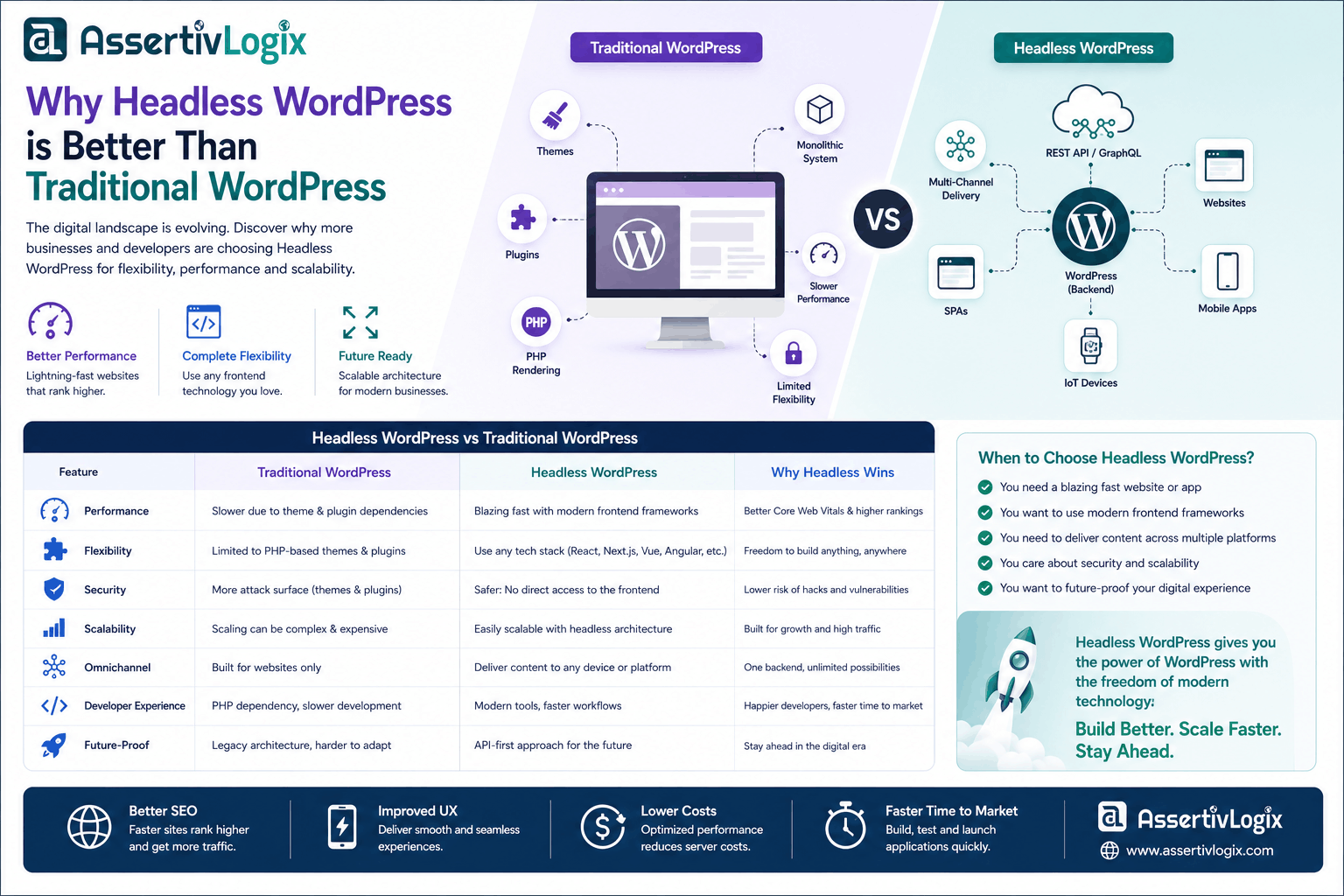
Traditional WordPress combines the backend (where you manage content) and the frontend (what visitors see) into one application. Themes control the appearance of your website, while plugins extend its functionality.
When a visitor opens a page, WordPress processes PHP code, queries the database, loads plugins, renders the theme, and then generates the HTML that is sent to the browser.
Traditional WordPress Architecture
- WordPress CMS
- MySQL Database
- PHP Processing
- WordPress Theme
- Plugins
- Browser
What Is Headless WordPress?
Headless WordPress separates content management from content presentation. WordPress continues to serve as the backend CMS, but the frontend is built using modern JavaScript frameworks such as React, Next.js, Vue.js, Nuxt, Angular, or mobile technologies.
The frontend retrieves content using the WordPress REST API or GraphQL instead of rendering pages through PHP themes.
Headless Architecture
- WordPress CMS
- REST API or GraphQL
- React / Next.js / Vue.js
- Mobile Apps
- Web Applications
- Smart Devices
Traditional WordPress vs Headless WordPress
| Feature | Traditional WordPress | Headless WordPress |
|---|---|---|
| Frontend | WordPress Theme | React, Next.js, Vue, Angular |
| Performance | Good | Excellent |
| Security | Good | Better |
| Scalability | Moderate | High |
| Flexibility | Limited to Themes | Unlimited |
| Content Delivery | Website Only | Multiple Platforms |
| Developer Experience | PHP-Based | Modern JavaScript Stack |
Benefits of Headless WordPress
1. Better Performance
Frontend frameworks such as Next.js support static generation, server-side rendering (SSR), and incremental static regeneration (ISR), allowing pages to load significantly faster than traditional WordPress themes.
Combined with CDN delivery and caching, Headless WordPress can dramatically improve Core Web Vitals and user experience.
Learn how to improve website performance in our Core Web Vitals Optimization Guide.
2. Improved Security
Since visitors no longer interact directly with your WordPress theme or PHP frontend, the attack surface is reduced.
Benefits include:
- Reduced exposure to theme vulnerabilities
- Fewer plugin-related risks
- Improved infrastructure isolation
- Greater control over frontend security
Read our WordPress Security Checklist for additional best practices.
3. Superior Scalability
Modern frontend applications can be deployed independently on platforms such as Vercel, Netlify, Cloudflare Pages, or AWS. This separation allows you to scale the frontend and backend independently based on traffic demands.
4. Omnichannel Content Delivery
One of the biggest advantages of Headless WordPress is the ability to deliver the same content across multiple platforms.
- Websites
- Mobile apps
- Smart TVs
- Digital kiosks
- Voice assistants
- IoT devices
Content is managed once in WordPress and consumed wherever it’s needed.
5. Better Developer Experience
Developers can use modern technologies such as React, Next.js, Vue.js, TypeScript, and GraphQL while editors continue using the familiar WordPress dashboard.
SEO Considerations
Headless WordPress can achieve excellent SEO performance when implemented correctly. Frameworks like Next.js support server-side rendering and static site generation, making it easier to produce crawlable pages with fast load times.
Important SEO considerations include:
- Server-side rendering (SSR)
- Static site generation (SSG)
- Metadata management
- XML sitemaps
- Structured data
- Canonical URLs
When Should You Choose Headless WordPress?
Headless WordPress is an excellent choice for:
- Enterprise websites
- SaaS platforms
- High-traffic publishing sites
- Multi-language websites
- Progressive Web Apps (PWAs)
- Mobile applications
- Content-heavy platforms
- Businesses requiring API-driven architecture
When Traditional WordPress Is the Better Choice
Traditional WordPress remains the best solution for many websites because it’s easier to manage and offers thousands of ready-to-use themes and plugins.
It’s ideal for:
- Small business websites
- Blogs
- Portfolio websites
- Small WooCommerce stores
- Marketing websites
- Organizations with limited development resources
Challenges of Headless WordPress
- Higher development costs
- Requires JavaScript expertise
- More complex deployment process
- Plugin compatibility may vary
- Additional frontend maintenance
Best Practices for Headless WordPress
- Use Next.js for SEO-friendly rendering.
- Cache API responses.
- Optimize images using modern formats.
- Implement proper security measures.
- Use a CDN for static assets.
- Monitor performance continuously.
Frequently Asked Questions
Is Headless WordPress faster?
Yes. When combined with modern frontend frameworks, static generation, and CDN delivery, Headless WordPress can significantly outperform traditional WordPress.
Can WooCommerce work with Headless WordPress?
Yes. WooCommerce can be used in a headless architecture through APIs, although implementation is more complex than a traditional WooCommerce setup.
Do I still use the WordPress dashboard?
Absolutely. Content editors continue using the familiar WordPress admin area while developers build and maintain a separate frontend application.
Conclusion
Headless WordPress combines the content management strengths of WordPress with the flexibility and performance of modern frontend technologies. It enables businesses to create fast, secure, scalable, and omnichannel digital experiences while giving developers complete control over the user interface.
However, it’s not the right solution for every project. Traditional WordPress remains an excellent choice for many small and medium-sized websites due to its simplicity and extensive ecosystem.
If you’re planning a high-performance website, SaaS platform, enterprise portal, or API-driven application, Headless WordPress can provide the flexibility and scalability needed to support future growth.
At Assertivlogix, we specialize in WordPress Development, Headless WordPress solutions, WooCommerce development, API integrations, performance optimization, and custom web applications. Whether you need a traditional WordPress website or a modern headless architecture, our team can help you build a solution tailored to your business goals.