
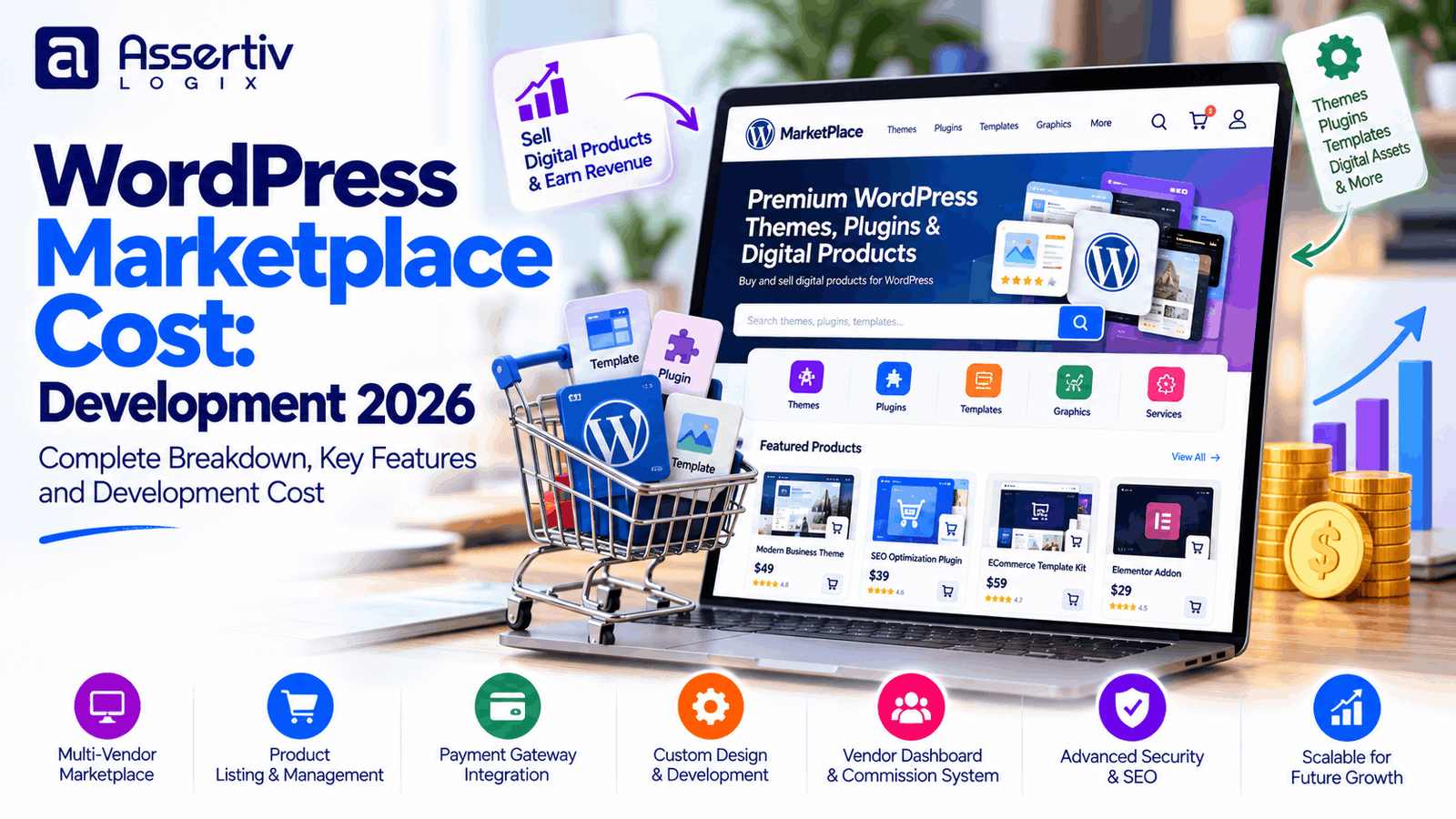
WordPress marketplace cost depends on what you want buyers and sellers to do on your website. A simple marketplace where vendors submit product listings is relatively straightforward. A platform where sellers manage their own stores, customers place orders from multiple vendors, commissions are calculated automatically, and payouts are handled through payment integrations requires considerably more work.
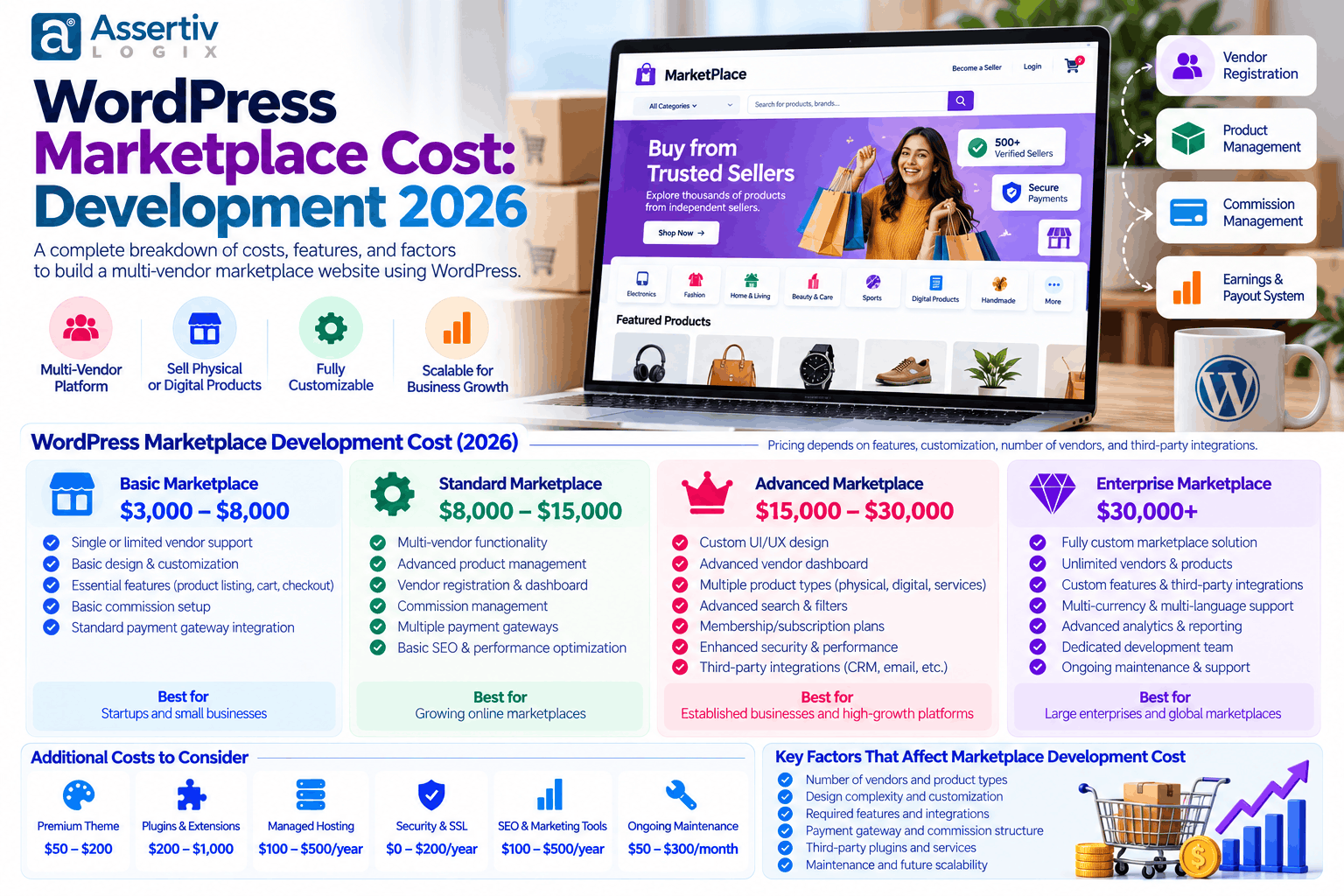
For a professionally developed WordPress marketplace in 2026, a reasonable initial planning budget is around $2,500–$5,000 for a basic multi-vendor setup. A more customized marketplace may cost $5,000–$15,000+, while platforms with advanced vendor dashboards, complex commission rules, custom workflows, and third-party integrations can exceed $20,000.
These are estimates rather than fixed quotations. The final price depends on the marketplace model, number of vendors, product types, payment requirements, design, and amount of custom development involved.
Let’s look at where the budget goes, which features make marketplace projects expensive, and how to avoid spending money on functionality you don’t need yet.
WordPress Marketplace Cost at a Glance
The easiest way to estimate WordPress marketplace cost is to decide how much independence your vendors need.
| Marketplace Type | Estimated Development Cost | Typical Features |
|---|---|---|
| Basic Listing Marketplace | $1,500–$3,000 | Listings, registration, basic search |
| Basic Multi-Vendor Store | $2,500–$5,000 | Vendor accounts, products, orders, commissions |
| Custom Multi-Vendor Marketplace | $5,000–$15,000 | Custom dashboards, workflows, advanced design |
| Service or Booking Marketplace | $5,000–$15,000+ | Bookings, availability, scheduling, payments |
| Advanced Marketplace Platform | $15,000–$30,000+ | Complex integrations, automation, custom functionality |
A marketplace selling downloadable products has different requirements from one selling physical products from hundreds of vendors. Likewise, a service marketplace with booking calendars and provider availability needs different functionality from a standard product marketplace.
These estimates cover development planning, not every business expense. Product data, legal documents, payment processing, marketing, hosting, and ongoing support may require separate budgets.
Marketplace Development Cost by Type
1. Basic Listing Marketplace
Estimated cost: $1,500–$3,000
This model works when your main goal is to connect buyers with sellers rather than process every transaction directly on the website.
For example, you might build a directory where local businesses list services, property owners publish rental listings, or suppliers showcase their products.
The website may include vendor registration, listing submission, search filters, categories, enquiry forms, and an administrator approval process.
Because the platform has fewer transaction-related requirements, it can be a practical way to validate a marketplace idea before investing in a more complicated system.
2. WooCommerce Multi-Vendor Marketplace
Estimated cost: $2,500–$5,000
This is a common starting point for businesses that want multiple sellers to offer products through one online store.
Vendors can manage their products and orders, while the marketplace owner controls the overall website and earns money through commissions or vendor fees.
Typical functionality includes:
- Vendor registration and approval
- Vendor product management
- Individual vendor dashboards
- Central product catalog
- Shopping cart and checkout
- Commission configuration
- Order management
- Basic sales reporting
This budget assumes that established WooCommerce and multi-vendor plugins cover most requirements. Custom vendor workflows, complicated shipping rules, or specialized payout systems can increase the cost.
Our WooCommerce development services page is relevant if your marketplace requires a customized ecommerce setup.
3. Custom Multi-Vendor Marketplace
Estimated cost: $5,000–$15,000+
A custom marketplace usually becomes necessary when the standard plugin workflow doesn’t match how the business operates.
You may need vendor-specific pricing, advanced product approval, custom commission structures, multiple shipping methods, vendor performance reports, or integrations with external inventory systems.
Design also becomes more involved. Buyers need a smooth shopping experience, while sellers need an efficient dashboard for managing products, orders, earnings, and account information.
The more these workflows differ from standard WooCommerce functionality, the more development and testing time the project requires.
4. Service and Booking Marketplace
Estimated cost: $5,000–$15,000+
A marketplace for freelancers, consultants, tutors, repair professionals, or other service providers has different requirements from a product store.
Depending on the business model, the website may need provider profiles, availability calendars, booking requests, scheduling, deposits, cancellation rules, reviews, messaging, and payment handling.
Scheduling can be particularly complicated when providers work in different time zones or offer services with different durations and pricing rules.
5. Advanced Marketplace Platform
Estimated cost: $15,000–$30,000+
Some marketplace businesses require more than plugins and theme customization can comfortably provide.
Advanced projects may include custom APIs, ERP or CRM integrations, automated vendor onboarding, complex commission rules, sophisticated reporting, custom search, or integrations with external business applications.
At this point, the project should be scoped as a software platform with clear requirements, milestones, security considerations, and testing plans.
Features That Affect WordPress Marketplace Cost
Two marketplaces can have similar designs and completely different development budgets. The difference is often in what happens after someone registers, places an order, or requests a payout.
Vendor Registration and Management
A basic registration form is relatively simple. A more advanced system may require identity checks, document uploads, manual approval, vendor roles, account verification, and onboarding emails.
Vendor Dashboards
Sellers may need to manage products, stock, orders, shipping, discounts, reviews, and earnings. A dashboard with custom reports and business-specific workflows takes more effort than a standard vendor panel.
Commission Rules
The marketplace might charge a fixed fee, a percentage of each sale, or different rates for different vendors and categories.
Some businesses also need subscription fees, listing fees, promotional placement, or commission adjustments for refunds. These rules should be defined before development begins.
Search and Product Filters
Basic category filters are straightforward. Advanced filtering by location, availability, price, attributes, ratings, or vendor-specific information may require additional plugins or custom development.
Shipping and Order Management
When one order contains products from several vendors, shipping and fulfillment can become more complicated.
The system may need to split orders, calculate different shipping costs, track shipments separately, and handle returns according to each seller’s policies.
Custom Integrations
Connecting a marketplace with accounting software, inventory systems, CRM tools, shipping providers, or external APIs can significantly affect the project budget.
WordPress Marketplace Cost Breakdown
For budgeting purposes, it helps to separate the development work into individual components.
| Development Component | Indicative Budget |
|---|---|
| Requirements and technical planning | $200–$800 |
| UI/UX design | $500–$2,500+ |
| WordPress and WooCommerce setup | $300–$800 |
| Multi-vendor plugin configuration | $300–$1,000 |
| Custom vendor functionality | $500–$5,000+ |
| Payment and commission configuration | $300–$1,500+ |
| Testing and deployment | $300–$1,000+ |
These figures are component-level estimates, not a list of mandatory charges. Some services overlap, and a bundled project quotation may combine several items.
For a broader comparison of WordPress development budgets, read our WordPress Development Cost Guide for 2026.
Marketplace Plugins and WooCommerce
WordPress and WooCommerce provide a useful foundation for many marketplace projects. Multi-vendor extensions can add seller registration, vendor dashboards, commissions, and other marketplace features.
Depending on your requirements, you may evaluate solutions such as:
- Dokan for multi-vendor marketplace functionality.
- WCFM Marketplace for vendor and marketplace management.
- WooCommerce for core ecommerce functionality.
Check the current pricing, compatibility, feature limits, and license terms before selecting a solution. Plugin plans and features can change over time.
Using an established plugin can reduce development time, but it doesn’t eliminate the need for configuration, design, testing, or custom development where required.
Payments, Vendor Commissions, and Payouts
Payment handling deserves special attention when estimating WordPress marketplace cost.
A normal ecommerce store generally collects payment from a customer and processes the order. A marketplace may also need to calculate each seller’s share, retain the platform commission, manage refunds, and arrange payouts.
These are different processes, and not every payment gateway supports the same marketplace payout workflow.
Before choosing a payment provider, confirm:
- Whether marketplace or connected-account payments are supported
- How vendor onboarding works
- Who handles refunds and disputes
- How commissions are calculated
- When vendors receive their funds
- Whether your country and business model are supported
Some payment providers offer marketplace-specific products, but eligibility and supported countries vary. Confirm the current provider requirements before committing to a technical approach.
Ongoing WordPress Marketplace Costs
The initial development invoice isn’t the full cost of operating a marketplace.
Once sellers and customers depend on your platform, you need to keep it secure, available, and compatible with updated software.
| Ongoing Expense | Typical Budget |
|---|---|
| Domain | $10–$30+/year |
| Hosting | $20–$200+/month |
| Premium plugins | $100–$1,000+/year |
| Maintenance and support | $100–$500+/month |
| Payment processing | Depends on provider and transaction volume |
| Marketing and customer acquisition | Depends on business goals |
A small marketplace can start with modest infrastructure. A marketplace with thousands of listings, frequent searches, large product images, and many concurrent users may need stronger hosting and more regular performance work.
Our WordPress Maintenance Cost guide explains recurring maintenance expenses in more detail.
WordPress Marketplace Cost: Budget Examples
Example 1: Local Business Directory
Imagine a directory where local businesses create profiles, publish service listings, and receive enquiries. The platform doesn’t process customer payments.
A starting development budget of around $1,500–$3,000 may be reasonable if an existing directory solution covers the main requirements.
Example 2: Multi-Vendor Product Marketplace
Now imagine a marketplace where multiple sellers list products, manage orders, and pay a commission to the platform owner.
A planning budget of $3,000–$7,000 may cover a standard plugin-based setup with moderate customization. Complex payout handling, vendor-specific shipping, and custom dashboards can push the cost higher.
Example 3: Service Booking Marketplace
A platform connecting customers with service providers may need provider profiles, availability, scheduling, bookings, reviews, notifications, and payment integration.
A reasonable starting budget might be $5,000–$12,000+, depending on the booking logic and payment workflow.
These examples are for initial planning. An accurate quotation requires a feature list and technical review.
How to Reduce WordPress Marketplace Development Cost
You don’t need to launch with every feature you might eventually want.
- Start with one marketplace model: Decide whether you are selling products, services, listings, or bookings.
- Use established plugins where practical: Avoid custom-building features that already work well in a suitable solution.
- Keep the first release focused: Launch the core vendor, listing, and customer workflows before adding advanced analytics or automation.
- Define commission rules early: Late changes to payment and payout logic can cause expensive rework.
- Prepare product and vendor data: Clean import files and organized content reduce setup time.
- Plan for growth: Choose a maintainable foundation without paying for unnecessary enterprise infrastructure at launch.
If the platform needs custom business logic, our WordPress Plugin Development Services page is relevant to evaluating a custom plugin approach.
How to Choose a WordPress Marketplace Developer
Marketplace development requires more than experience building ordinary WordPress websites. The developer needs to understand vendor permissions, product ownership, order handling, commissions, refunds, and payment integrations.
Before hiring someone, ask:
- Have you built a multi-vendor marketplace before?
- Which marketplace plugin would you recommend for this project?
- How will vendors manage their products and orders?
- How will commissions, refunds, and payouts work?
- Are shipping and vendor-specific settings included?
- How will the website be tested before launch?
- What maintenance and support are available afterward?
Compare the actual scope of each proposal rather than selecting a developer solely on the lowest quoted price.
Marketplace Development at Assertivlogix
Assertivlogix provides WordPress and WooCommerce development for businesses that need custom website functionality, ecommerce integrations, and tailored development workflows.
Depending on the project, a marketplace engagement may include:
- Marketplace requirements and technical planning
- WordPress and WooCommerce setup
- Vendor registration and management
- Marketplace design and responsive layouts
- Product listing and order workflows
- Commission configuration
- Payment and shipping integrations
- Custom plugin development
- Performance and security improvements
- Testing and deployment
The right approach depends on whether a standard multi-vendor plugin covers the business model or whether custom functionality is required.
Tell us whether you’re building a product marketplace, service directory, or booking platform. Share your vendor requirements, payment model, and essential features so we can help estimate the development scope and budget.
Final Thoughts on WordPress Marketplace Cost
WordPress marketplace cost in 2026 can range from a few thousand dollars for a basic multi-vendor website to $20,000 or more for a custom platform with complex integrations and business workflows.
The biggest cost drivers are usually vendor management, commission rules, payment processing, custom dashboards, shipping, booking logic, and third-party integrations.
Before development starts, decide how the marketplace will make money, what vendors can do, how customers place orders, and how payments will be handled.
Then build the simplest reliable version that supports those requirements. You can add advanced functionality as the marketplace attracts sellers and customers.
Frequently Asked Questions
How much does a WordPress marketplace cost in 2026?
A basic multi-vendor marketplace may cost around $2,500–$5,000. Custom marketplaces with advanced features and integrations can cost $5,000–$15,000+, while complex platforms may exceed $20,000.
Can I build a marketplace with WordPress and WooCommerce?
Yes. WordPress and WooCommerce can provide the foundation for many multi-vendor marketplaces when combined with a suitable marketplace extension and any necessary custom development.
What is the cheapest way to build a multi-vendor marketplace?
Use WordPress, WooCommerce, a suitable multi-vendor plugin, an existing theme, and standard payment and shipping integrations. Keep the first version focused on essential vendor and customer workflows.
Does a WordPress marketplace need custom development?
Not always. Standard marketplace plugins can handle many common features. Custom development may be needed for specialized commission rules, unique dashboards, unusual payment workflows, or external integrations.
How do marketplace websites make money?
Common models include transaction commissions, vendor subscriptions, listing fees, promoted listings, booking fees, and paid access to premium features.
How much does marketplace maintenance cost?
Basic maintenance may start around $100–$200 per month. More complex platforms requiring regular development, performance optimization, and priority support may cost $500 or more per month.
How long does it take to build a WordPress marketplace?
A basic plugin-based marketplace may take several weeks. Custom marketplaces can take several months depending on integrations, design, payment workflows, and testing requirements.
How can I get an accurate marketplace development quote?
Prepare your marketplace model, vendor requirements, commission rules, payment workflow, design preferences, and required integrations. Then contact Assertivlogix for a project consultation.